





What You're Probably Thinking (But Rarely Say Out Loud)
Maybe you've caught yourself thinking…
💭 "Why does one paragraph take our whole evening?"
💭 "I can see they have ideas. I don't understand why writing them down is so hard."
💭 "Am I helping them learn, or just getting this assignment finished?"
💭 "I'm losing patience — and then I feel guilty about it."
💭 "What happens when the work gets harder and I can't help anymore?"
💭 "I don't want English homework to be the thing that damages our relationship."
And underneath all of that, there's a quieter thought you may not have said to anyone:
"What if we keep getting them through each assignment — and they never learn how to do it for themselves?"
Meanwhile, your teen is having their own internal conversation.
"Everyone else seems to know what to write."
"My answers are never good enough."
"I'm just bad at English."
That's the part that stings, isn't it? Not the grade. The sentence they've started saying about themselves.
And here's the thing you need to hear: this isn't your fault. You've done the hardest part already — you noticed, and you refused to ignore it. That's not failure. That's a parent paying attention.
The Hidden Culprit Nobody Has Named for You
Here's what almost every parent assumes: if we read more, practise more, work harder, it'll click.
But reading gives a teen something to think about. It doesn't teach them how to explain what they think.
The truth is, "analyse this passage" isn't one skill. It's a sequence of them:
Understand the question → form an interpretation → choose the right evidence → explain how the evidence supports the idea → organise the answer.
A teen can be strong at three of those steps and completely stuck on the fourth. And from the outside, being stuck on one step looks exactly like "not academic," "lazy," or "just not an English person."
That's why the same feedback keeps appearing. "Develop your analysis" isn't an instruction — it's a description of what's missing. It tells them what the answer needs. It doesn't show them how to build it.
And that's why your help, as generous as it is, hasn't fixed it. Prompting gets today's assignment finished. It doesn't give your teen the practice of doing the thinking themselves. The assignment gets finished. The skill doesn't get learned. That's the pattern.
They're not bad at English. They're missing one step — and nobody has found it yet.
LET'S DO THIS!
And If Nothing Changes…
Now, I'm not going to tell you your teen is doomed. That's not how this works, and you'd rightly stop reading.
But I will tell you what usually happens when a specific skill gap goes unnamed — because it doesn't stay the same size.
Think of it like a nail in a floorboard. It's uncomfortable now, but not quite uncomfortable enough to move. So you shift your weight, you work around it, you keep going. The problem is that the nail doesn't go away. The floor just gets harder to walk on.
Here's what that looks like in real terms:
Tonight: One hard assignment a week. A parent who can still step in and rescue the paragraph.
In two years: Senior English. Longer responses, higher stakes, less scaffolding, and a teacher with thirty other students. You won't be sitting beside them in the exam room, and neither will I.
In four years: Subject choices, prerequisites, and results that follow them out of school — quietly narrowing doors they don't even know they want open yet.
And in the meantime, the smaller costs add up:
→ Time: Another year of evenings disappearing into one paragraph.
→ Confidence: "I'm bad at English" hardening into something they believe about themselves as a person, not just as a student.
→ Relationship: English staying the thing you argue about, instead of the thing you talk about.
→ Money: More resources, more tutoring, more support that re-teaches the book instead of teaching the missing step.
→ Independence: You, still sitting beside them at 15, wondering how you'll ever step back.
The gap doesn't close on its own. It just gets more expensive to close.
These are the patterns that tend to happen when a skill gap goes unaddressed — not a prediction, and not a claim that this programme is the only way forward. But it is what I'd want to know if it were my child.
But Here's the Good News
This isn't a talent problem. It's a findable problem.
A written response is a sequence of teachable moves. When someone sits down and identifies exactly which step your teen is stuck on — and then teaches that step, demonstrates it, and gives them practice with real feedback — the blank page stops being a mystery.
And something else happens too. When the work finally sits at the level they can actually succeed at, the resistance fades. Teens don't resist English. They resist feeling stupid. Fix the second thing and the first one tends to disappear.
Which means you get to do something you've been waiting a long time for: step back, and be their parent again.
In the next section, I'll show you exactly how that works — and what it looks like inside the CHST English Lab.
LET'S DO THIS!
Think About How You Learned to Drive
You didn't learn by watching someone else drive. You didn't learn by memorising the road rules until you could recite them. And you certainly didn't learn by having a parent in the passenger seat grab the wheel every time you hesitated at a junction.
You learned because someone sat beside you, showed you what to do, let you try it badly, told you exactly what to fix, and then let you try again — while they were still there to catch it.
That's the part almost every teen is missing with English.
Right now, your teen gets the demonstration. A teacher explains what the book means. And they get the verdict — feedback on the finished answer, three days later, when the moment has already passed.
What they don't get is the middle. The part where they attempt it themselves, get stuck, and have someone help them at the exact point of stuckness. That's not a gap in your teen's effort. It's a gap in the structure of how they're being taught.

The CHST Guided English Method: Learn → Practise → Improve
This is the vehicle. Not a workbook, not a revision guide, not another round of "just read more." A three-part teaching cycle, delivered live, in a group of no more than four students.
Each week, your teen works on one main English skill across three connected sessions:
Learn. The tutor explains the skill in plain language and models the thinking behind a strong answer — out loud, step by step, so your teen can see how an interpretation is actually built rather than just what a finished one looks like.
Practise. Your teen applies it while the tutor watches, checks their understanding, and identifies precisely where they get stuck. Not "needs to develop analysis." The actual step: this is the part you can't do yet.
Improve. Your teen receives one specific next step, revises their work, and then tries the same skill on a fresh example — while the tutor is still in the room.
That last part is the defining feature, and it's worth pausing on. The complete teaching-and-feedback cycle happens inside the sessions. Your teen doesn't attempt the work alone at home and wait days to find out what went wrong. They attempt it, get help at the sticking point, and act on the feedback immediately, with support right there.
Across three terms, this builds deliberately: from explaining an idea in a single paragraph, to writing complete responses, to comparing perspectives and applying skills with far greater independence.
The Cold, Hard Truth
Here it is, and I'd rather say it plainly than dress it up:
You cannot prompt a skill into a person. You can only teach it, watch them try it, and correct it while you're still in the room.
That's the whole thing. Everything you've been doing at the kitchen table has been generous, patient and well-intentioned — and it has been doing the thinking your teen can't yet do alone. Which is exactly why the same feedback keeps coming back.
If your teen could learn this by being helped to finish, they would have learned it years ago.
Call To Action
Why This Works When Everything Else Hasn't
Here's the mechanism, and once you see it you can't unsee it.
Take the five-step sequence from earlier — understand the question, form an interpretation, choose evidence, explain how the evidence supports the idea, organise the answer. A teen can be strong at four of those steps and completely stuck on the fifth. And from the outside, being stuck on one step looks identical to "not academic," "lazy," or "just not an English person."
Here's what that looks like in practice. A student writes:
"Maya hides her certificate in her bag. This means she puts it away."
They've repeated the action. That's the sticking point — and it's invisible unless someone is watching for it. So the tutor asks one question: "What might hiding an achievement suggest about how she feels about sharing it?"
The student revises:
"Maya hides her certificate, suggesting she is reluctant to draw attention to her achievement."
Then the tutor checks whether they can make that same connection in a passage they've never seen before. That's the difference between a corrected sentence and a learned skill.
Now compare that to the three things you've already tried:
More reading gives your teen something to think about. It doesn't teach them how to explain what they think.
Homework help gets the assignment finished. It doesn't transfer the thinking to your teen — which is why the struggle returns with the next question.
Content tutoring re-teaches the book. If the tutor is explaining what the chapter means rather than teaching the missing step, the same comments were always going to come back. "Develop your analysis" isn't an instruction. It's a description of what's missing. It tells a student what the answer needs. It doesn't show them how to build it.
And this is the part that matters most to you, isn't it? Not the paragraph. The sentence your teen has started saying about themselves. When the work finally sits at the level they can actually succeed at, "I'm bad at English" can become "I know which part I need help with, and I have a way to practise it."
That's not a confidence trick. That's what happens when someone finally names the step.
"But What About…"
Let me take the obvious doubts head-on, because you're entitled to honest answers.
"They already get English lessons at school." They do — and school does the diagnosing well. What school rarely has is the time to sit with one student and teach the specific missing step. Thirty other students, one teacher, one lesson. The gap gets identified. It rarely gets taught.
"We've tried tutoring before and it didn't help." Then it's worth asking what that tutoring was actually teaching — the content of the book, or the skill your teen was missing? If it was content, the same feedback was always going to return. That's not a failure of tutoring. It's a mismatch of target.
"They just need help finishing their homework." Immediate help is genuinely useful, and I'm not dismissing it. But if the goal is a teen who can eventually do this without you, then finishing the assignment is the short game. Building the skill is the long one.
"Three sessions a week is a lot." It is, and I won't pretend otherwise. It's a real commitment, and only you can judge whether it fits your family's week. What I'd ask you to weigh it against is this: you're already spending hours on English — prompting, re-explaining, sitting beside them, absorbing the tension. This replaces that time rather than adding to it. But it's your call, and you should make it with your eyes open.

INTRODUCING ...
The Classic High School English Lab
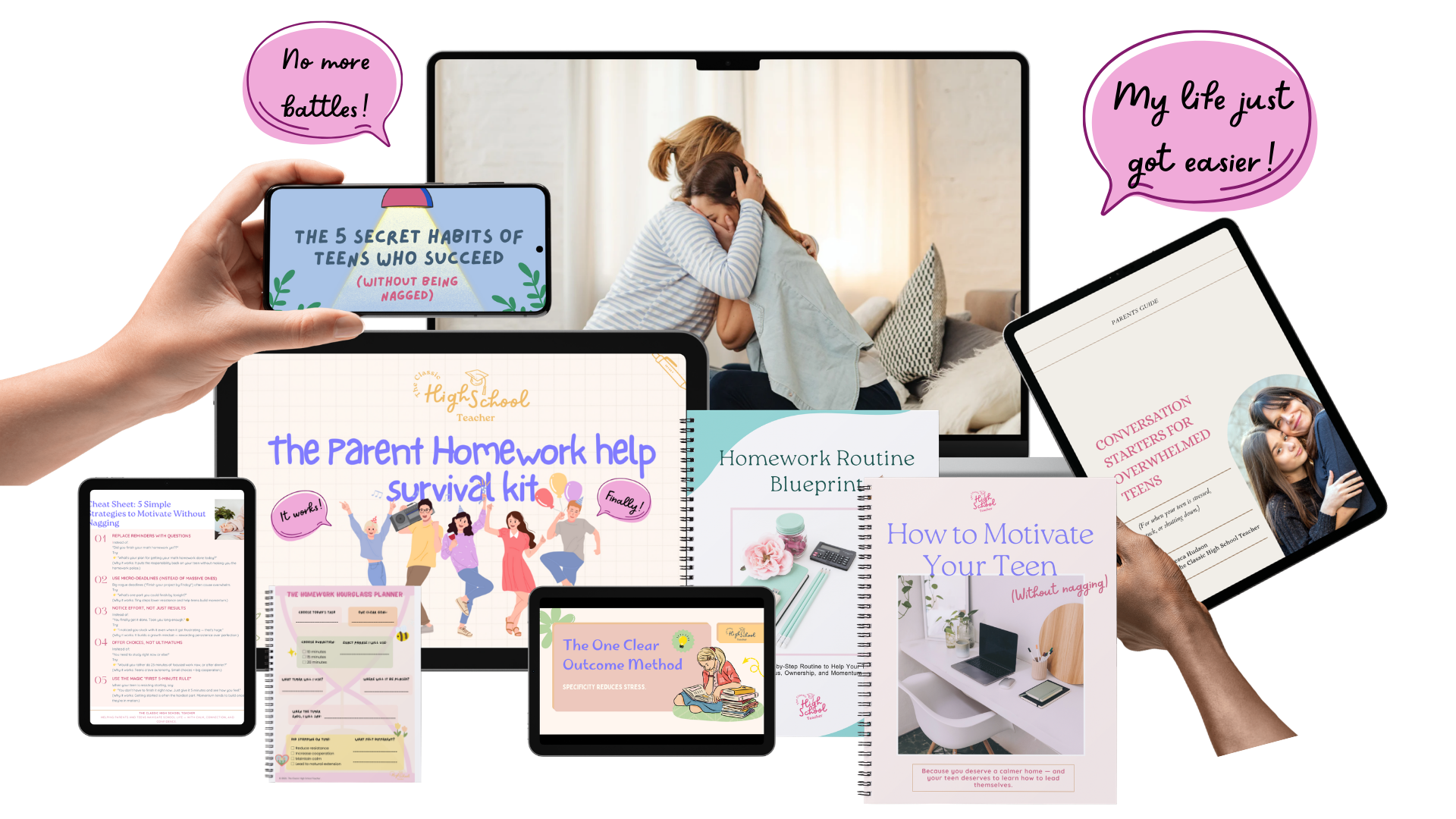
The Classic High School English Lab isn't just another English tutor — it's the step-by-step pathway that takes your teen from "I don't know what to write" to explaining an idea in writing, on their own
The CHST English Lab is a live, small-group English tutoring programme for teens aged 13–15 — three 60-minute sessions a week for ten weeks, in groups of no more than four — designed to close the gap between reading a text and writing a clear, analytical answer about it.
Your teen doesn't need more worksheets, more texts, or another adult telling them to "add more detail." They need the thinking behind an answer made visible, then time to practise it with a tutor watching — and that's exactly what happens inside the Lab.
Get My Survival Kit Now for $27!Here's what's waiting for your teen inside:
✅ 30 LIVE Sessions Per Term — Learn → Practise → Improve Ten explicit teaching sessions, ten guided practice sessions and ten feedback-and-revision sessions, so your teen doesn't just hear the method, they use it, get corrected and improve their work while the tutor is still in the room.
✅ Groups of No More Than FOUR Students The single most important number on this page. Small enough that every student's ideas get heard, every quotation choice gets checked and every paragraph gets inspected — no hiding at the back of a class of thirty.
✅ The CHST Guided English Method A predictable, repeatable routine that makes the invisible thinking behind a good answer visible: understand the question → build an interpretation → choose evidence → explain it → write the paragraph. No more staring at a blank page waiting for you to supply the first sentence.
✅ Eliminate the Guesswork From Every Step Your teen will know exactly what to do after they've picked a quotation — the part where most students stall — and will practise revising their own paragraph instead of waiting for someone to rewrite it for them.
✅ Visible Progress You Can Actually See A writing portfolio of first attempts, revisions and a final task, plus individual progress records and weekly parent updates, so you're never guessing whether it's working or wondering what to do next.
✅ A Clear Three-Term Pathway to Independence Term one builds structured analytical paragraphs. Later terms connect those paragraphs into complete responses, comparison and argument — with your teen needing less prompting from you at every stage.
🎁 PLUS: Ten Weekly Catch-Up Lessons — Included at No Additional Cost (US$500 Value Per Term) A short prerecorded recap for every teaching week, with a worked example and a practice activity, so a missed session never becomes a missed skill — or another evening of you reconstructing a lesson you never heard.
This isn't a course your teen watches. It's a room of four where their thinking gets heard, their writing gets read, and their next step gets named — week after week, until they can do it without you.
Join the Waitlist → Only four students per group.STAR Study Sessions Workshops
BRINGING THE STAR POWER FROM STUDENTS TOGETHER EACH WEEK, FROM ALL OVER THE WORLD.
PLEASE NOTE:
There are no refunds for this purchase, regardless of attendance or schedule changes. By purchasing, you gain lifetime access to the session recordings, allowing you to replay them at any time. This ensures you can revisit the material whenever you need a refresher or couldn't attend the live session.
Thank you for supporting a small business dedicated to boosting students' confidence and understanding of the world! Your participation helps further our mission to expand students' knowledge and skills, empowering them to excel in English literature and beyond.
Welcome to The Classic High School Teacher!
Hi there! I’m Francesca.
Over the last 20 years I have taught as a high school English Literature, Social Studies & Ancient History teacher, become a seasoned writer of teaching resources for teachers globally, & gained extensive experience in the business world with creating and publishing. As a result, I have mastered the art of making complex ideas accessible.
I am also a parent myself, so I understand the significance of critical thinking in decision-making and everyday challenges.
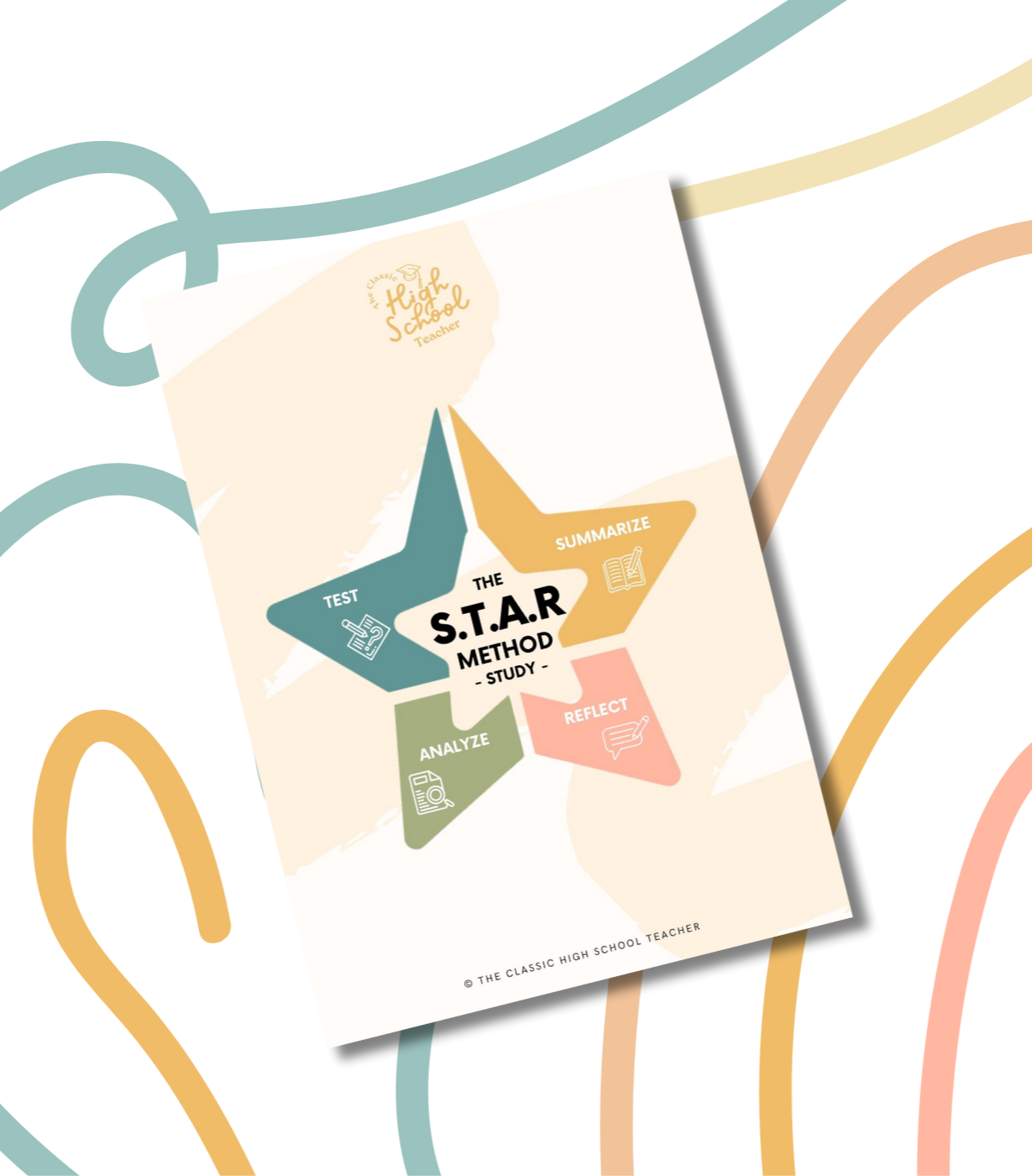
As a result of the fantastic results my own students enjoyed while using my unique teaching method, I have developed my special STAR study framework to share with your teenager in the comfort of their own home.
I am committed to passing on my wealth of knowledge and experiences to help more students and their parents become empowered to study English Literature at school with confidence.
By fostering an environment that encourages questioning, analysis, & creative problem-solving, I aim to equip you with the strategies needed to navigate not only academic achievements, but also the tools to navigate in life's various arenas as well - so I have created a series of masterclasses and courses to teach you my unique method!
LET'S DO THIS!