









A parent’s quick guide
Where Is My Teen Getting Stuck?
Answer a few quick questions and I’ll show you where I would start.
Sometimes the problem isn’t that a teenager “can’t do English.” It’s that there is one particular step getting in the way. This short guide will help you identify that step — and point you towards the CHST resource I would recommend first.
What is the biggest problem right now?
What usually happens when they try to do the work?
Which area causes the most frustration?
What would feel like the biggest win right now?
Your guide result
Here’s Where I’d Start
HERE’S WHAT MAY BE HAPPENING
Your teenager may be able to read the words perfectly well — but understanding what a text means, noticing important details and knowing what to say about it are separate skills.
TRY THIS FIRST
A useful first step is to stop asking, “What happened?” and try: “What do you think the writer wants us to notice here?” That shifts the focus from simply following the story to beginning interpretation.
WHERE I’D START
Read & Respond™
Read & Respond™ teaches teenagers how to move from reading the words to understanding, explaining and responding to what they have read.
Explore Read & Respond →You know your teenager best. This guide is designed to help you identify a useful starting point — not to label them.
Your guide result
Here’s Where I’d Start
HERE’S WHAT MAY BE HAPPENING
It sounds as though the ideas may be there — but getting those ideas out of their head and into clear written language is the difficult part.
TRY THIS FIRST
A useful first step is to ask your teenager to SAY the answer before they try to write it. Then capture the simplest version of what they said. Clear first. Polished second.
WHERE I’D START
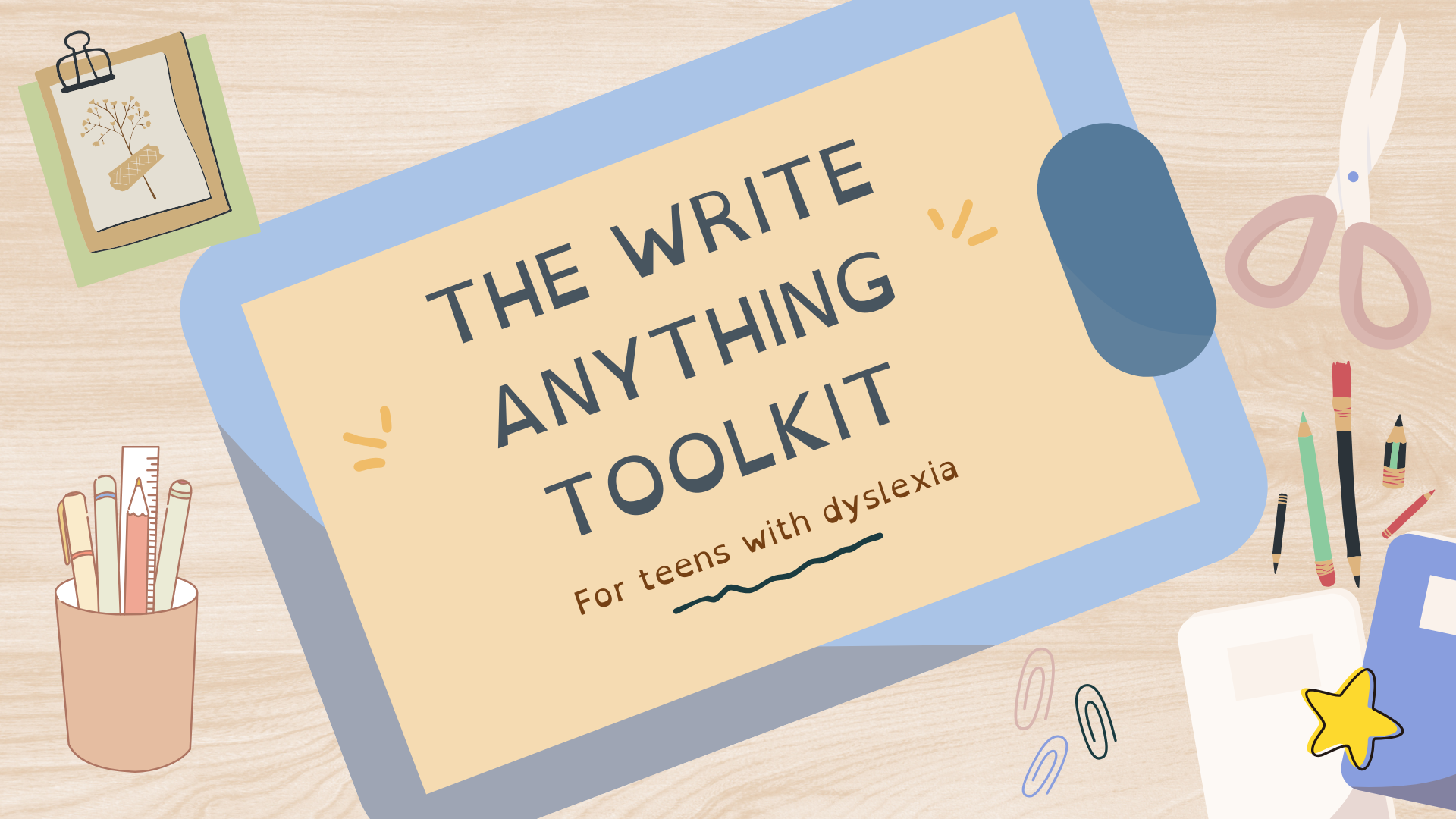
Write Anything Toolkit™
The Write Anything Toolkit™ is designed to help teenagers turn ideas into written language using a more flexible, practical process.
Explore Write Anything →You know your teenager best. This guide is designed to help you identify a useful starting point — not to label them.
Your guide result
Here’s Where I’d Start
HERE’S WHAT MAY BE HAPPENING
The problem may not be vocabulary or intelligence. Your teenager may simply never have been shown a clear, repeatable process for turning an essay question into a strong response.
TRY THIS FIRST
A useful first step is to ask: “What is ONE thing you could say in answer to this question?” Write that sentence first. Then build around it.
WHERE I’D START
The Essay Clinic™
The Essay Clinic™ teaches the essay-writing process step by step — from understanding the question and building an argument to paragraphs, evidence, explanation and polishing the final response.
Explore The Essay Clinic →You know your teenager best. This guide is designed to help you identify a useful starting point — not to label them.
Your guide result
Here’s Where I’d Start
HERE’S WHAT MAY BE HAPPENING
Your teenager may understand the text perfectly well — but the language used in English questions and teacher feedback may be creating an extra barrier. Words like analyse, infer, evaluate, effect and significance tell students what kind of thinking they need to show.
TRY THIS FIRST
A useful first step is to take one recent question and circle the instruction word. Then ask: “What is this word actually asking you to DO?”
WHERE I’D START
The English Decoder™
The English Decoder™ teaches essential high-school English terminology in clear, practical language so teenagers can understand what questions and feedback are actually asking.
Explore The English Decoder →You know your teenager best. This guide is designed to help you identify a useful starting point — not to label them.
Your guide result
Here’s Where I’d Start
HERE’S WHAT MAY BE HAPPENING
Your teenager may be putting time into studying without using methods that actually help information stick. More time is not always the answer.
TRY THIS FIRST
A useful first step is to close the notes and ask: “What can you remember WITHOUT looking?” That simple retrieval step tells you far more than rereading the page again.
WHERE I’D START
Study Struggles Reset™
Study Struggles Reset™ helps teenagers replace ineffective study habits with clearer, more practical ways to learn and remember.
Explore Study Struggles Reset →You know your teenager best. This guide is designed to help you identify a useful starting point — not to label them.
Your guide result
Here’s Where I’d Start
HERE’S WHAT MAY BE HAPPENING
Your teenager may already be doing many things well. The next step may be understanding the language that separates a competent English response from a more sophisticated one. Teacher comments such as: “Develop your analysis.” “Explore the effect.” “Be more perceptive.” can sound clear to a teacher — but still leave a teenager wondering what they are supposed to DO differently.
TRY THIS FIRST
A useful first step is to take one piece of teacher feedback and translate it into an action. For example: “Develop this” might mean: Add another layer of explanation. Give a more precise example. Explain WHY the evidence matters.
WHERE I’D START
The English Decoder™
The English Decoder™ helps teenagers understand the language behind higher-level English questions and feedback.
Explore The English Decoder →You know your teenager best. This guide is designed to help you identify a useful starting point — not to label them.
Your guide result
Here’s Where I’d Start
HERE’S WHAT MAY BE HAPPENING
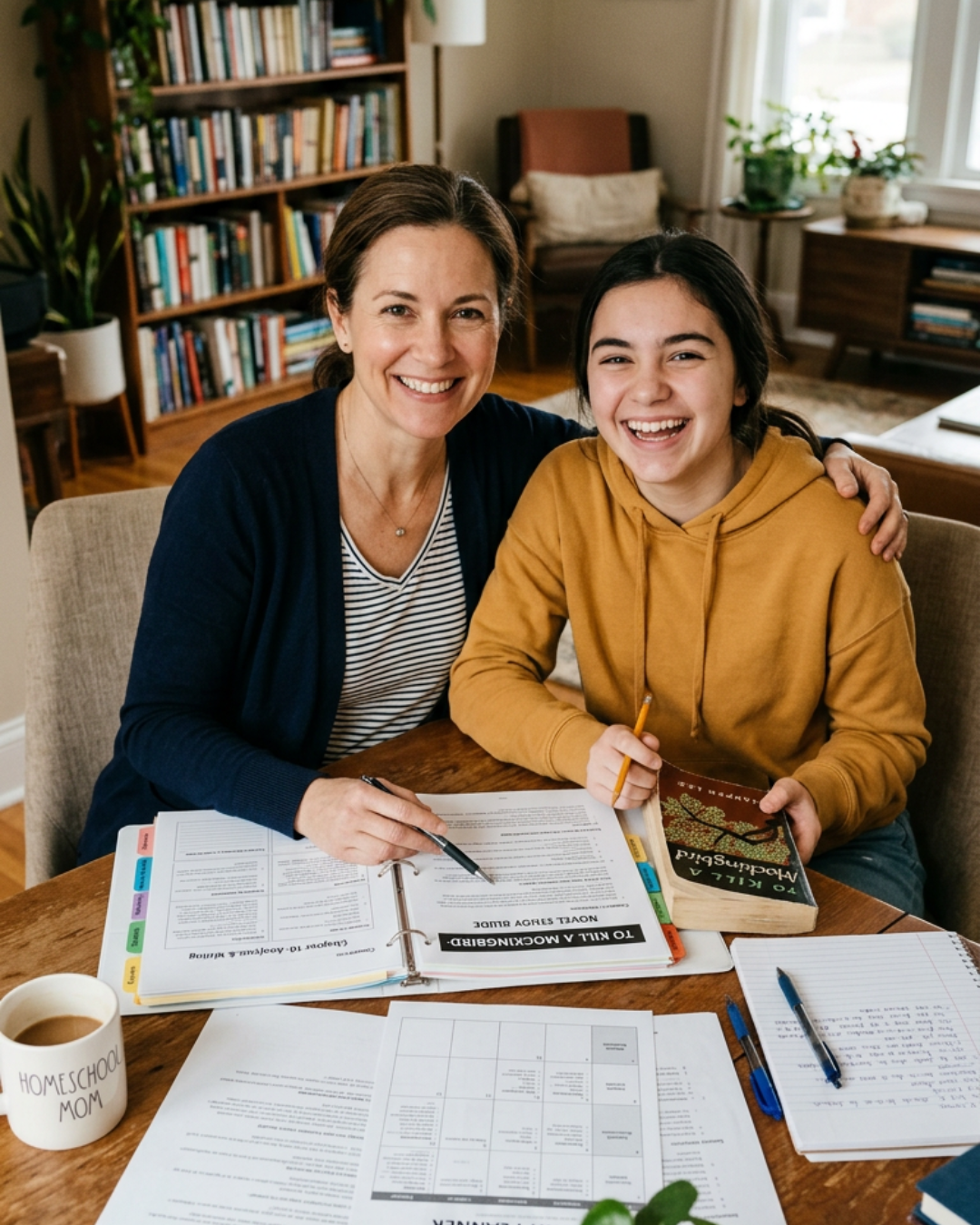
You do not need to turn every chapter into a worksheet to teach a novel well. The real skill is knowing when to let your teenager read — and when to pause for a meaningful teaching moment.
TRY THIS FIRST
A useful first step is to choose ONE scene, passage or moment from the current novel and ask: “Why might this moment matter?” That is enough to begin a useful literature lesson.
WHERE I’D START
How to Teach a Novel™
How to Teach a Novel™ gives homeschool parents a practical system for deciding what to teach, when to pause, what to discuss and how to build a meaningful novel study.
Explore How to Teach a Novel →You know your teenager best. This guide is designed to help you identify a useful starting point — not to label them.