Why Some of the Brightest Teenagers Take the Longest to Start

 (And why that's not necessarily a bad thing.)

Why Some of the Brightest Teenagers Take the Longest to Start

 (And why that's not necessarily a bad thing.)

Have you ever watched your teenager sit in front of a writing task for ten minutes...

...only to write three brilliant paragraphs in the final twenty?

 

When I first started teaching, this puzzled me.

I assumed the strongest students would start quickly.

The opposite was often true.

Some of my highest-achieving students were also my slowest starters.

At first, I worried they lacked motivation.

Then I realised something important.

They weren't doing nothing.

They were thinking.

The Hidden Difference Between Thinking and Overthinking

Thinking is helpful.

Overthinking is exhausting.

The trouble is, from the outside, they can look exactly the same.

A teenager sits quietly.

They haven't written anything.

A parent naturally assumes they've become distracted.

But inside their head, something very different may be happening.

They're asking themselves:

"Should I use this example?"

"What if there's a better idea?"

"Is this introduction good enough?"

"Maybe I should start again."

"What if my teacher doesn't like this?"

Instead of moving forwards...

They're trapped in an endless cycle of decisions.
The Overthinking Loop™

Over the years, I noticed many reluctant writers became stuck in the same pattern.

It looked something like this:

STEP 1

A writing task appears.

Immediately, the brain starts searching for the "perfect" idea.


STEP 2

Too many possibilities appear.

Instead of one idea...

There are ten.

Every possibility feels equally important.

Nothing gets chosen.


STEP 3

Doubt takes over.

"What if this isn't good enough?"

"Maybe there's a better answer."

"I'll just think a bit longer."


STEP 4

The page stays blank.

The longer the page stays empty...

The harder it becomes to begin.

Pressure builds.

Confidence falls.

The cycle starts again.

Why this matters

Many parents see a blank page and assume their teenager isn't trying.

Very often...

They're trying incredibly hard.

They're simply trying to solve every problem before writing the first sentence.

That's an impossible task.

The goal isn't to stop thinking.

The goal is to stop expecting perfect thinking before you begin.

One thing you can try tonight

If your teenager freezes before writing...

Don't ask:

"Why haven't you started?"

Instead ask:

"Which idea feels good enough to explore first?"

Notice the wording.

Not the best idea.

Just one that's worth exploring.

That tiny shift gives the brain permission to move instead of staying stuck.

Progress usually beats perfection.


Want the Complete System?
Explore Fast Draft

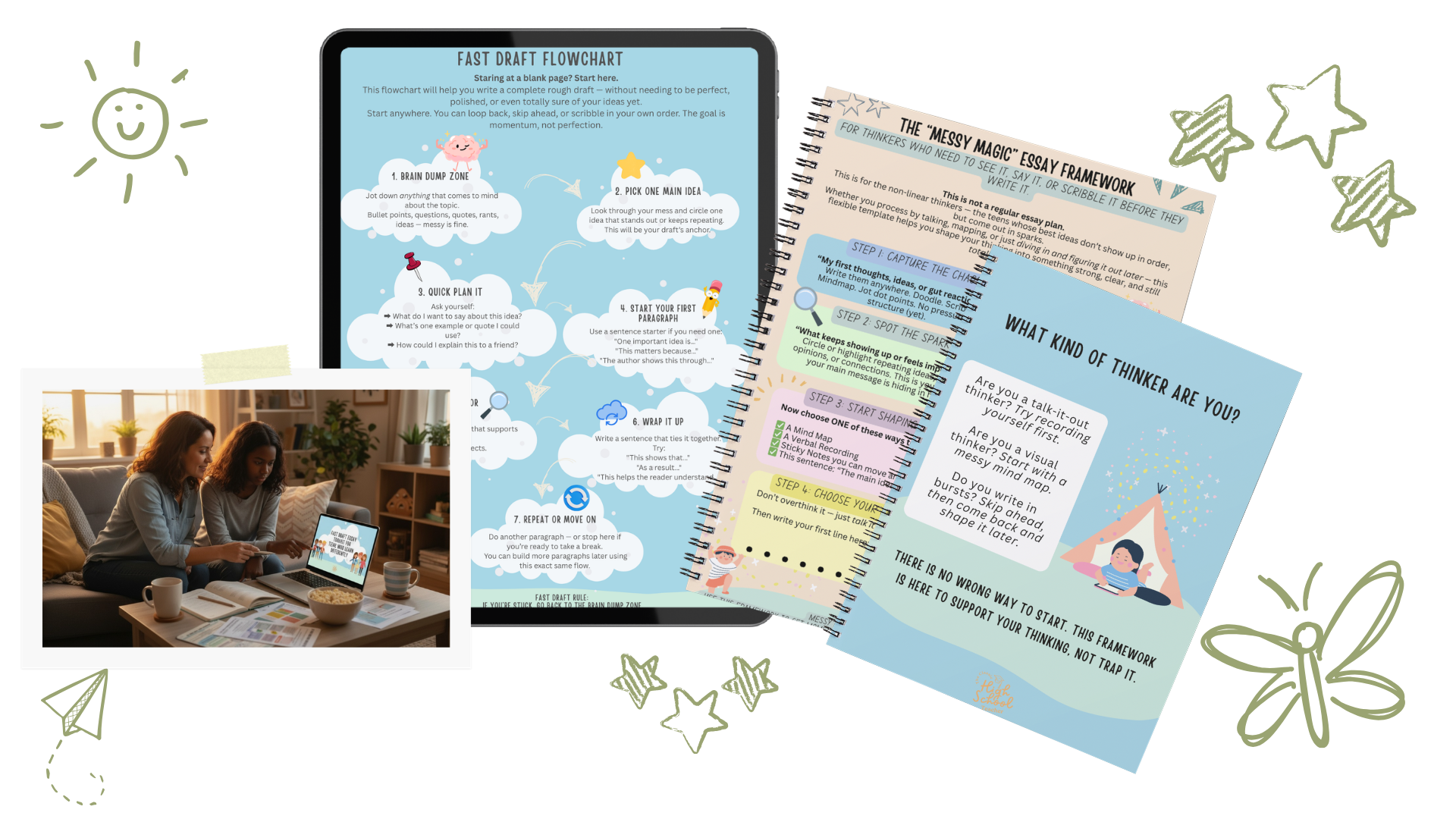
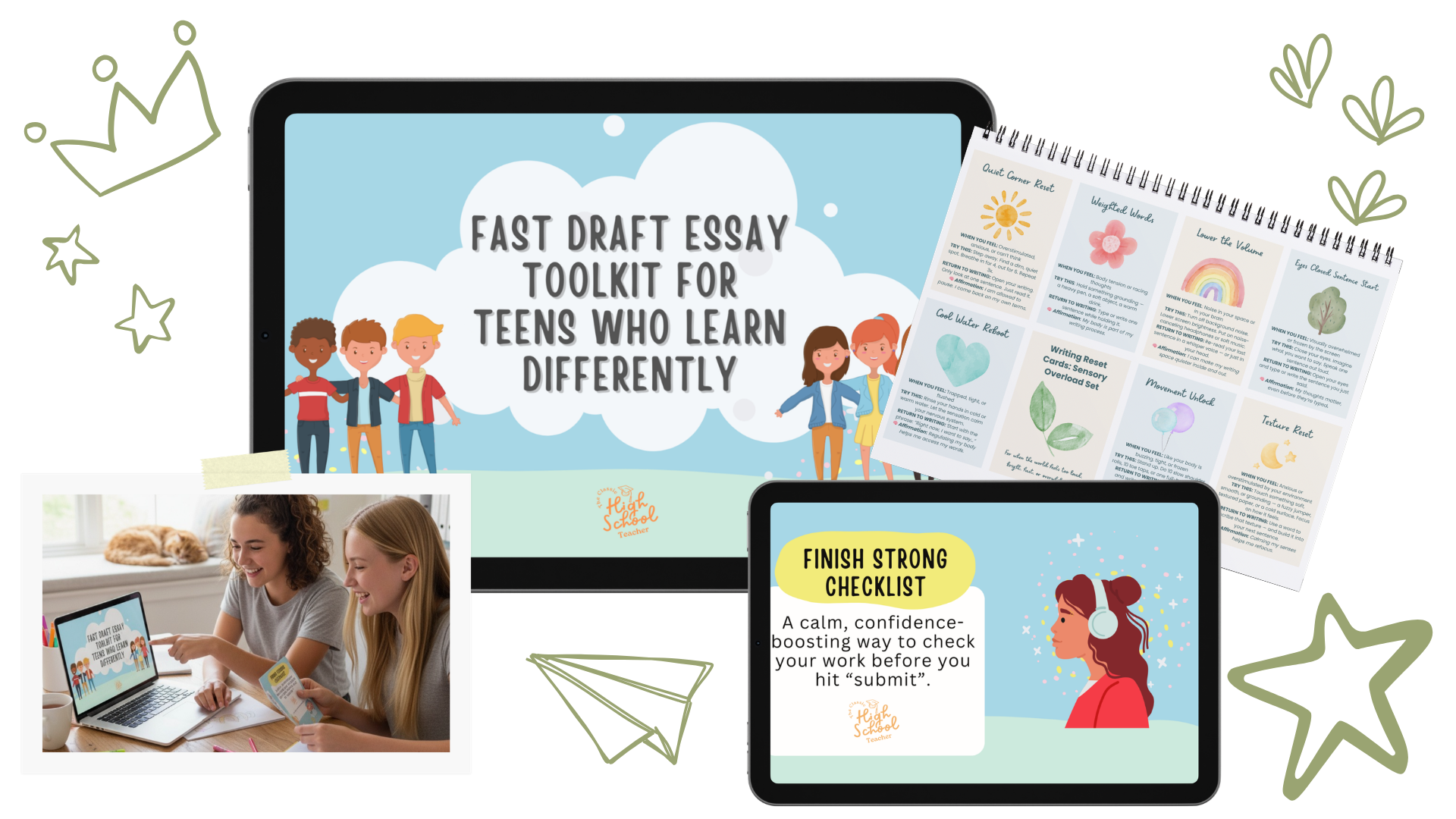
How Fast Draft breaks the Overthinking Loop™

This is exactly why I created Fast Draft.

Instead of expecting students to magically organise every thought in their head...

Fast Draft gives them a clear sequence to follow.

One small decision.

Then another.

Then another.

By breaking writing into manageable thinking steps, students no longer have to solve the entire essay before they begin.

Instead of feeling overwhelmed...

They simply follow the next step.

Parents often tell me that's when writing starts feeling possible again.

Fast Draft helps students:

✓ Get ideas out of their heads before they forget them.

✓ Stop chasing the "perfect" idea.

✓ Build momentum one small step at a time.

✓ Organise scattered thoughts into a clear direction.

✓ Begin writing with far less stress and frustration.

👉 Explore Fast Draft here


Before you go...

Here's something to think about.

Imagine two students.

One writes immediately.

The other spends five minutes quietly thinking before they begin.

Which one is actually working harder?

There isn't one correct answer.

But it's a wonderful conversation to have with your teenager.

Sometimes, understanding how they think is the first step towards helping them write with much more confidence.

The Overthinking Loop™

Over the years, I noticed many reluctant writers became stuck in the same pattern.

It looked something like this:

STEP 1

A writing task appears.

Immediately, the brain starts searching for the "perfect" idea.


STEP 2

Too many possibilities appear.

Instead of one idea...

There are ten.

Every possibility feels equally important.

Nothing gets chosen.


STEP 3

Doubt takes over.

"What if this isn't good enough?"

"Maybe there's a better answer."

"I'll just think a bit longer."


STEP 4

The page stays blank.

The longer the page stays empty...

The harder it becomes to begin.

Pressure builds.

Confidence falls.

The cycle starts again.

Learn More About the Fast Draft Method

Why this matters

Many parents see a blank page and assume their teenager isn't trying.

Very often...

They're trying incredibly hard.

They're simply trying to solve every problem before writing the first sentence.

That's an impossible task.

The goal isn't to stop thinking.

The goal is to stop expecting perfect thinking before you begin.

One thing you can try tonight

If your teenager freezes before writing...

Don't ask:

"Why haven't you started?"

Instead ask:

"Which idea feels good enough to explore first?"

Notice the wording.

Not the best idea.

Just one that's worth exploring.

That tiny shift gives the brain permission to move instead of staying stuck.

Progress usually beats perfection.


 LEARN MORE

Click Here To Find Out More Details

Our Community Testimonials

Hear from other educators and parents who have benefited from our resources and webinars, for over 10 years.

Our Community Testimonials

Hear from other educators and parents who have benefited from our resources and webinars.

Have questions or need assistance?

Reach out to us at [email protected]. We're here to help!