
You're in!
Your free Thinking Day lesson is on its way.
Check your inbox (and your Promotions or Spam folder just in case).
It should arrive in the next few minutes.
📩 Search for:
"Your Free Thinking Day Lesson"
While you're waiting...
Here's a little more about Thinking Day.
Browse Thinking Day Lessons →
You've just downloaded one lesson...
Here's what makes Thinking Day different.
Every Thinking Day lesson is a complete, ready-to-use conversation lesson for your teenager.
Ideas first. Writing second.
Most writing programmes teach students how to write.
Thinking Day helps them discover what to write about.
That's often the missing piece.
Once teenagers have an opinion...
writing has somewhere to begin.
Inside each lesson you'll find:
✓ One fascinating real-world question
✓ A beautifully designed student workbook
✓ Reading and discussion prompts
✓ Creative critical thinking activities
✓ Reflection questions
✓ Approximately 60 minutes of meaningful learning
✓ Print or use digitally
✓ No preparation required
Designed for homeschool families, independent learners and parents who want meaningful learning without another worksheet.
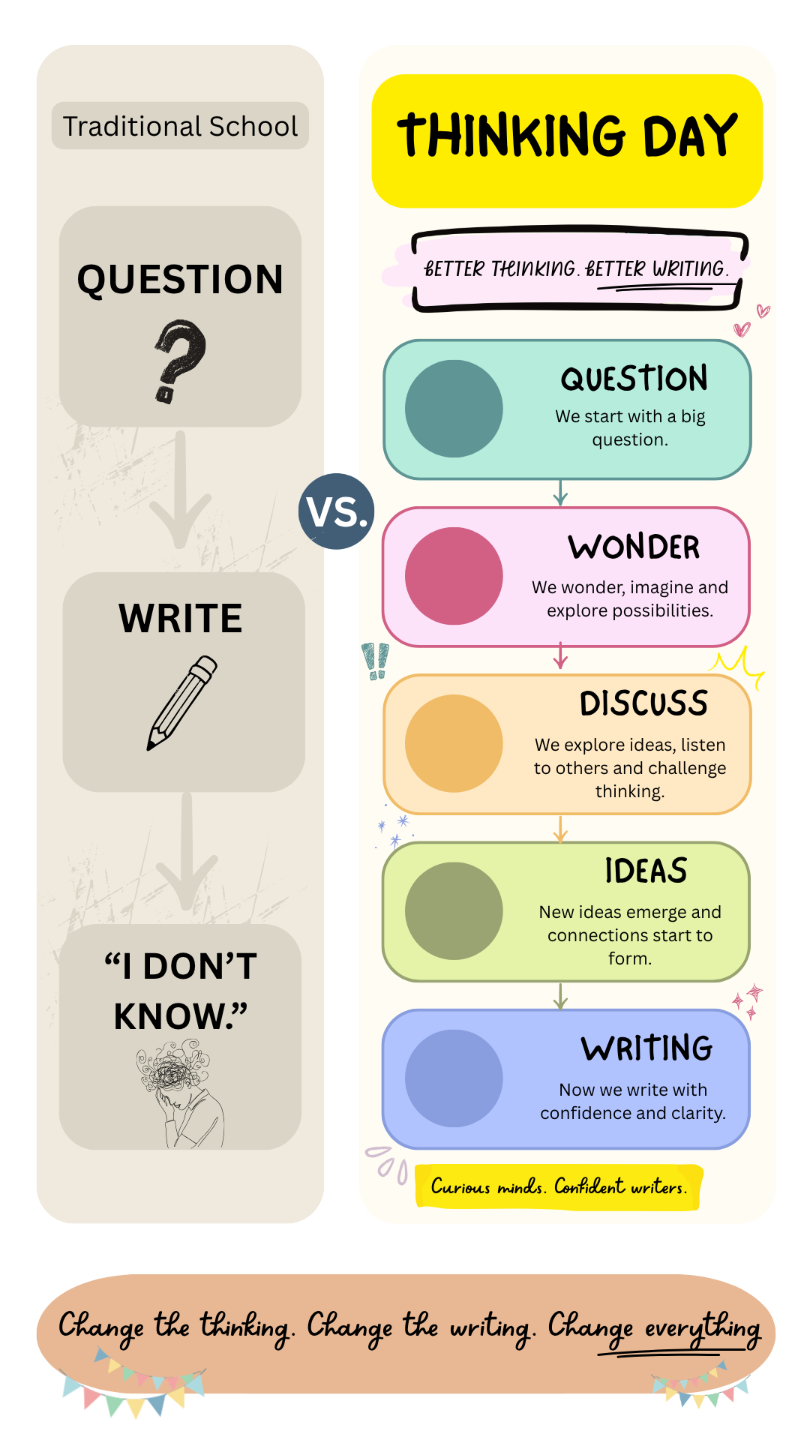
Has learning started to feel like a battle?
Not every teen learns best through worksheets, tests, and memorisation.
Some teens learn best when they can:
✓ Ask questions
✓ Explore ideas
✓ Discuss different perspectives
✓ Think out loud
✓ Connect learning to the real world
Thinking Day was designed for curious teenagers, reluctant learners, neurodivergent teens, homeschool families, and young people who learn differently.
Today's world asks teenagers to do something difficult.
Think independently...
while being surrounded by
• social media
• algorithms
• AI
• influencers
• endless opinions.
No wonder so many feel overwhelmed.
That's exactly why Thinking Day exists.
Every lesson begins with one fascinating question that helps teenagers:
✓ think for themselves
✓ build confidence in their own ideas
✓ practise respectful discussion
✓ discover ideas worth writing about

Thinking Day doesn't teach teenagers what to think. It gives them regular opportunities to discover what they think.
When Every Writing Task Ends With "I Don't Know"
Many families discover Thinking Day after they've noticed...
✓ "I don't know" has become every answer.
✓ Their teenager freezes when asked what they think.
✓ Writing feels overwhelming before it even begins.
✓ They're scared of getting the "wrong" answer.
✓ Learning has become stressful instead of interesting.
Thinking Day doesn't ask teenagers to perform.
It gives them time to discover what they actually think.
Because once teenagers have ideas they're excited about...
writing, discussion and confidence become much easier.
Help My Teen Discover Their Ideas →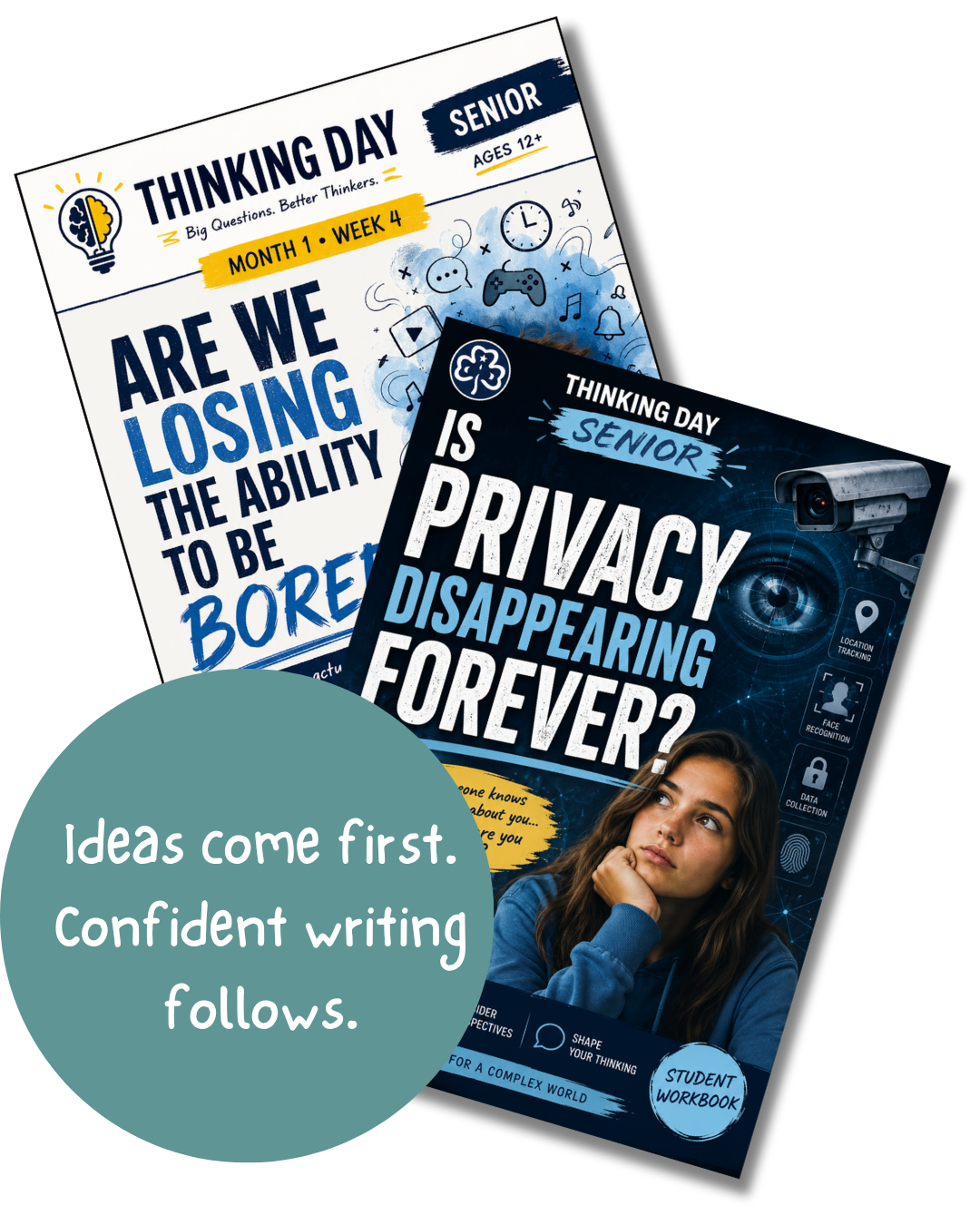
Why so many bright teenagers freeze when it's time to write
Many teenagers don't struggle because they can't write.
They struggle because they don't know what they think yet.
When every writing task begins with...
"What do you think about..."
...many neurodivergent teenagers panic.
Not because they're incapable.
Because they're still searching for an idea.
Thinking Day changes that.
Every lesson begins with a fascinating question that invites discussion before writing.
Instead of staring at a blank page...
your teen has already:
✓ explored different viewpoints
✓ challenged assumptions
✓ heard new ideas
✓ formed an opinion of their own
Writing becomes much easier when they finally have something worth saying.

What actually happens inside
Thinking Day?
1️⃣ Pick today's question.
2️⃣ Read together (or independently).
3️⃣ Discuss.
4️⃣ Complete the reflection activities.
5️⃣ Watch your teen begin explaining what they think.
Approximately 60 minutes.
No preparation required.

One Great Conversation Can Change An Afternoon.
Imagine what 52 great conversations could change.
Thinking Day Membership gives your teenager a brand-new fascinating question every week—helping them build ideas, confidence and curiosity over time.
Each month includes:
✓ 4 brand-new Thinking Day lessons
✓ Beautifully designed workbooks
✓ Family discussion prompts
✓ Printable and digital versions
✓ A growing library of previous lessons
Give My Teen Fresh Ideas Every Week →
For parents it's
wonderfully
simple.
✓ Open the lesson.
✓ Print the workbook (or use it digitally).
✓ Start the conversation.
We've already found the questions worth asking.
Keep The Momentum Going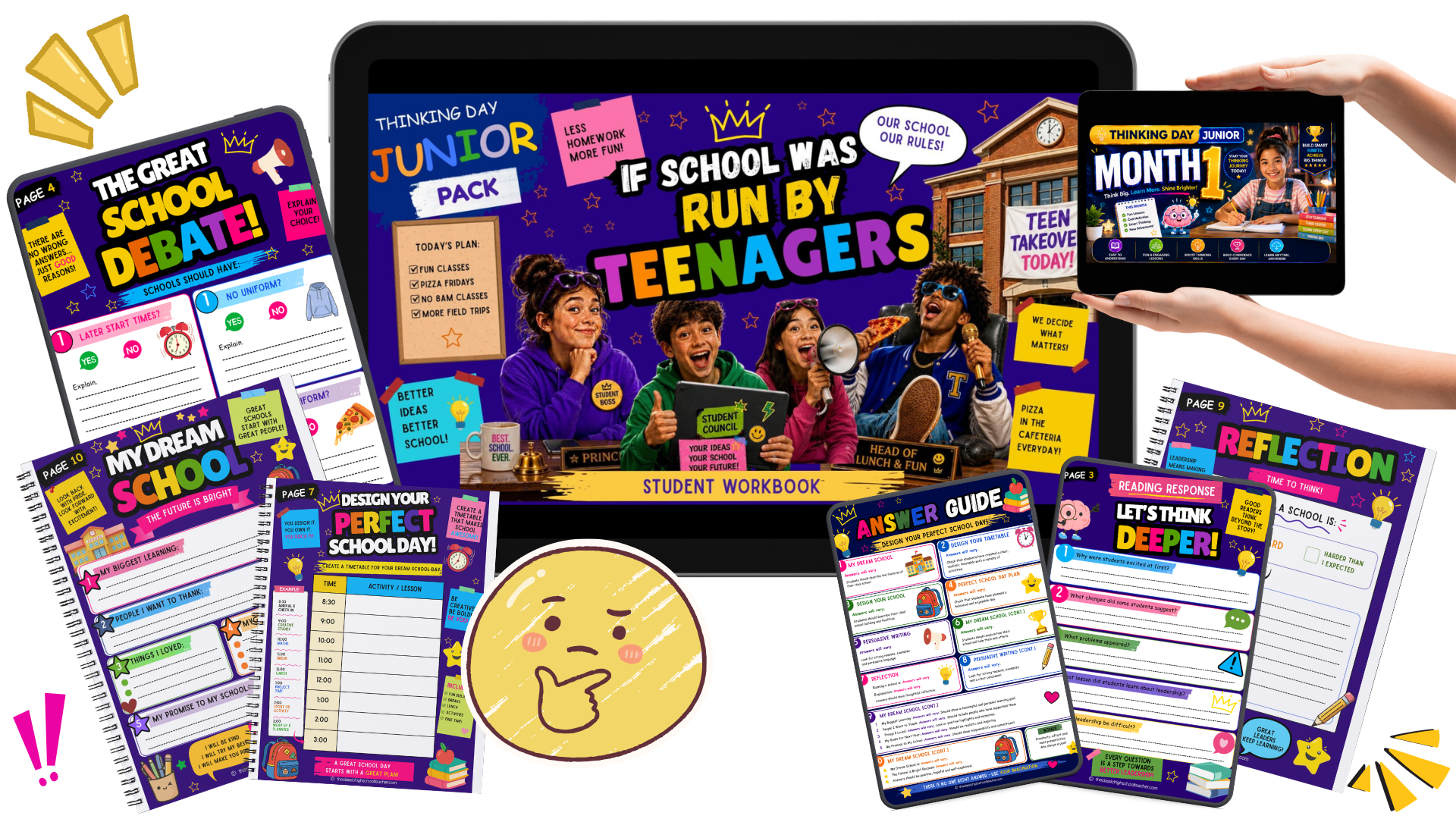
Why Curious Teenagers Become More Confident Writers
Many teenagers shut down when learning feels like:
✗ Another worksheet
✗ Another assignment
✗ Another "right answer"
But something changes when you ask:
"What if animals could talk?"
"Can we trust our memories?"
"Should schools ban mobile phones?"
Suddenly they're no longer searching for the right answer.
They're discovering their answer.
And once teenagers know what they think...
they have something worth talking about...
and eventually...
something worth writing about.
Browse This Month's Lessons →
Thinking Day doesn't begin with:
❌ A worksheet
❌ A test
❌ A right answer
It begins with one fascinating question
One conversation.
One opportunity to think out loud.
That's when many reluctant
teens begin
talking - and
writing - again
Especially helpful for teens who:
✓ Say "I don't know" even when they're bright
✓ Hate being put on the spot
✓ Love interesting conversations but dislikes worksheets
✓ Need time to think before answering
✓ Learn best through discussion and curiosity


INTRODUCING
THINKING DAY
Imagine Hearing Your Teen Say...
"I've changed my mind."
"I disagree."
"I've never thought about it like that."
"I think..."

Pick a topic. Open the lesson. Start the conversation.
Every lesson helps your teen...

Think independently

Explore Different Viewpoints

Build Confidence In Sharing Ideas

Have Meaningful Conversations

Discover Ideas Worth Writing About
If your teen has ever said...
"Why do we have to learn this?"
"I don't know."
"This is boring."
"I don't care."
...they may not need more worksheets.
They may need more opportunities to think.
See This Week's Lessons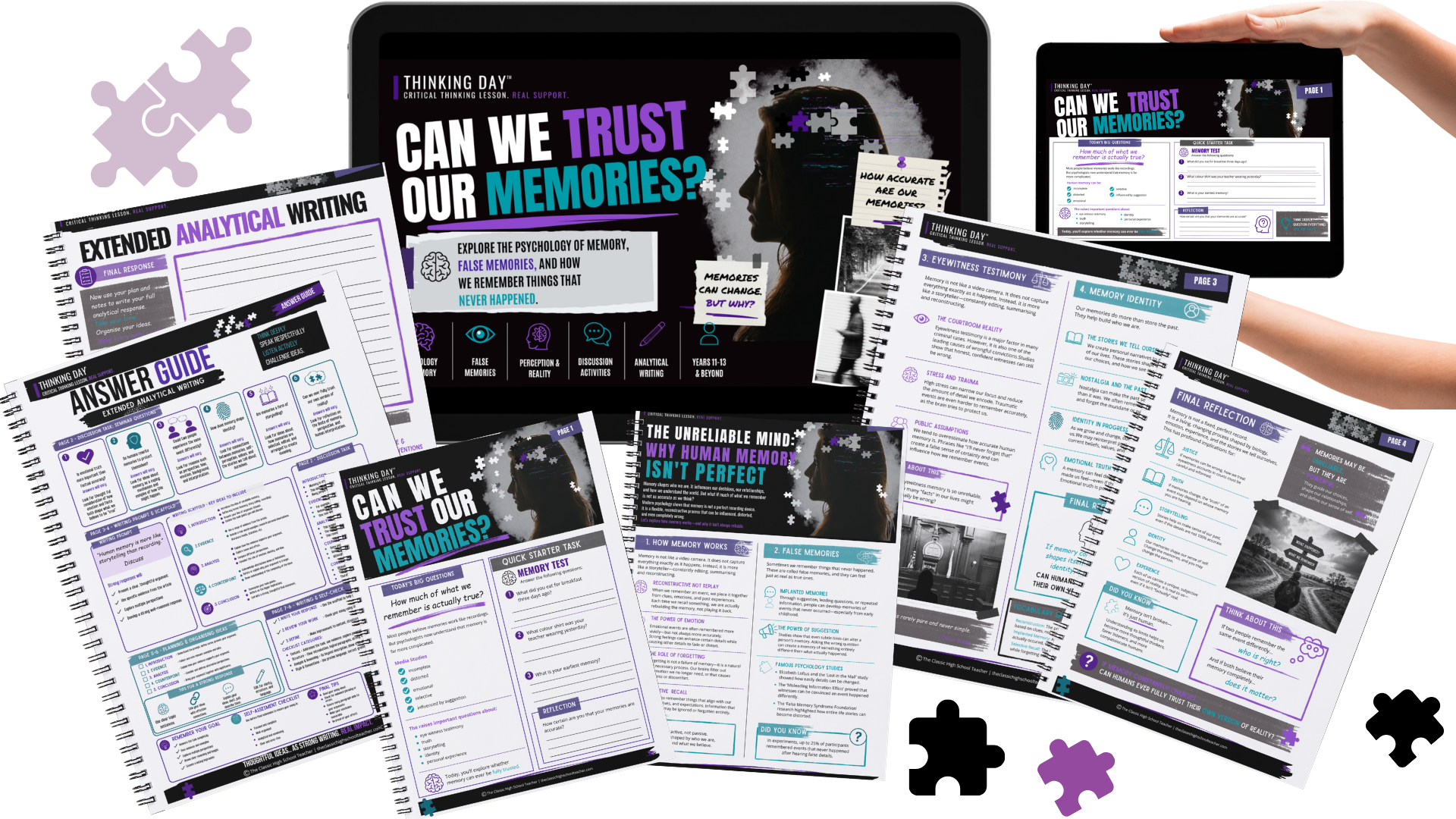
Everything You Need Is Included:
Complete Lesson Guide
A clear, step-by-step lesson plan showing exactly how to run the activity from start to finish.
Student Workbook
Engaging activities, discussion prompts, reflection tasks, and writing challenges designed to get students thinking.
Discussion Questions
Carefully crafted questions that encourage critical thinking, curiosity, communication, and deeper understanding.
Creative & Critical Thinking Activities
Move beyond memorisation and explore real-world ideas through debate, problem-solving, creativity, and discussion.
Extension Activities
Optional challenges for students who want to explore the topic further.
Print & Go or Use Digitally
Use the lessons however your family learns best.
No Prep Required
Simply choose a topic, open the lesson, and begin.
Perfect For:
✓ Homeschool families
✓ Curious learners aged 10–18
✓ Discussion-based learning
✓ Critical thinking development
✓ Reluctant writers
✓ Family learning time
✓ Rainy day learning
✓ Flexible homeschooling schedules
THIS WEEK'S THINKING LESSONS
Explore Big Questions Together

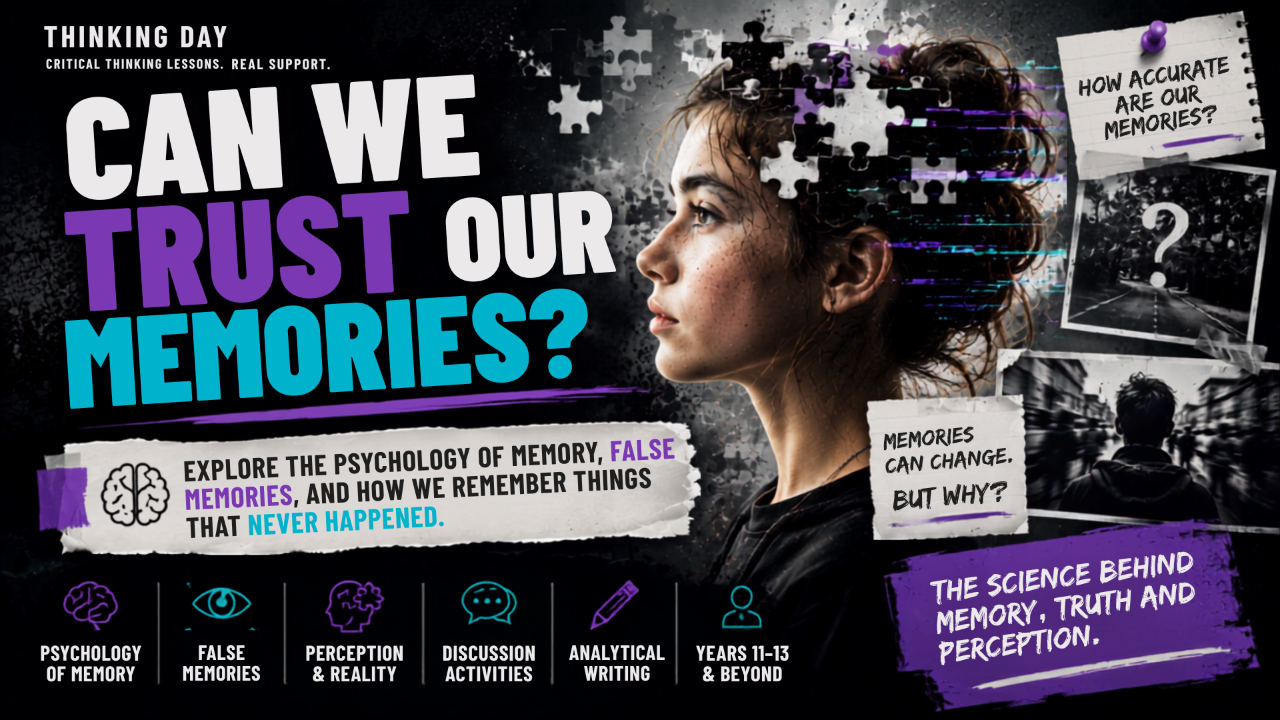
Can We Trust Our Memories?
A Thought-Provoking Lesson on Memory, Perception, and Human Psychology
What if one of your strongest memories never actually happened the way you remember it?
Most people believe memory works like a video recording—accurately storing events exactly as they occurred.
But psychologists have discovered something surprising.
Human memory is far less reliable than we think.
In this engaging critical thinking lesson, students will explore how memories are formed, why false memories occur, and whether eyewitness testimony can truly be trusted.
Through real-world examples, discussion activities, psychology research, and reflective challenges, students will investigate one of the most fascinating questions in human behaviour:
Can we really trust our own minds?
Big Question:
If our memories can change over time, how can we ever know what really happened?
A fascinating lesson that challenges students to question one of the most fundamental assumptions about human thinking and behaviour.
Add to Cart $9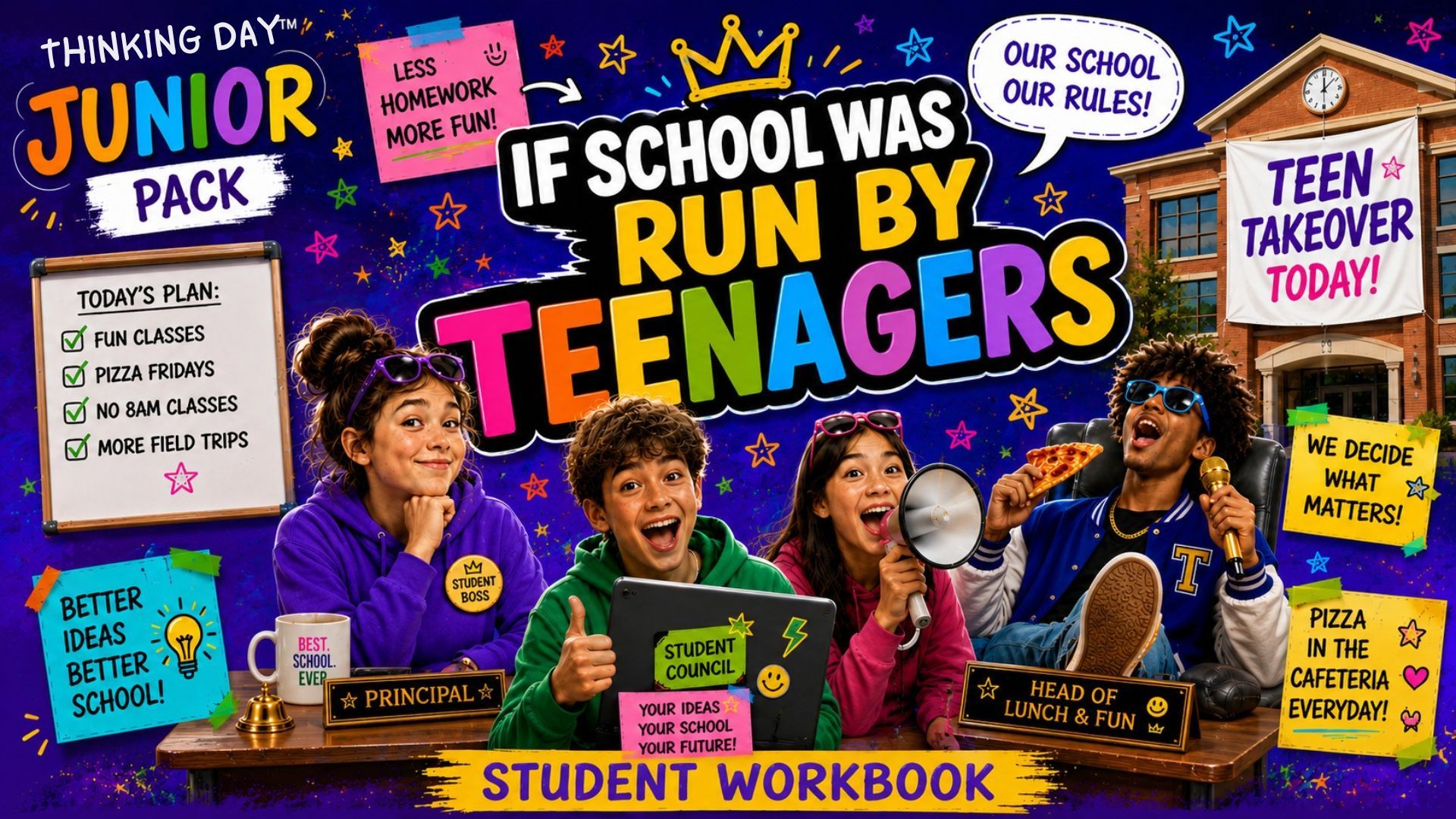

Can AI Replace Human Creativity?
Artificial intelligence can now write stories, create artwork, compose music, design logos, and generate videos in seconds.
But does that mean creativity is no longer uniquely human?
In this thought-provoking lesson, students will explore one of the biggest questions facing the future:
Can artificial intelligence truly be creative, or is human imagination something technology can never replace?
Students will examine real-world examples of AI-generated content, explore different definitions of creativity, and debate whether originality, emotion, and lived experience are essential parts of the creative process.
Along the way, they'll consider how technology is changing careers, education, art, and entertainment — and what this might mean for future generations.
Big Question:
If a machine can create something beautiful, meaningful, or inspiring, does that make it creative — or is there something uniquely human that AI can never replicate?
This engaging lesson encourages students to move beyond simple answers, evaluate different perspectives, and develop their own informed opinions about one of the most important technological debates of our time.
Add to Cart $9
See Exactly What's Included
Helping teenagers become thoughtful humans in an age of endless information and instant answers.
Not sure if these lessons are right for your family?
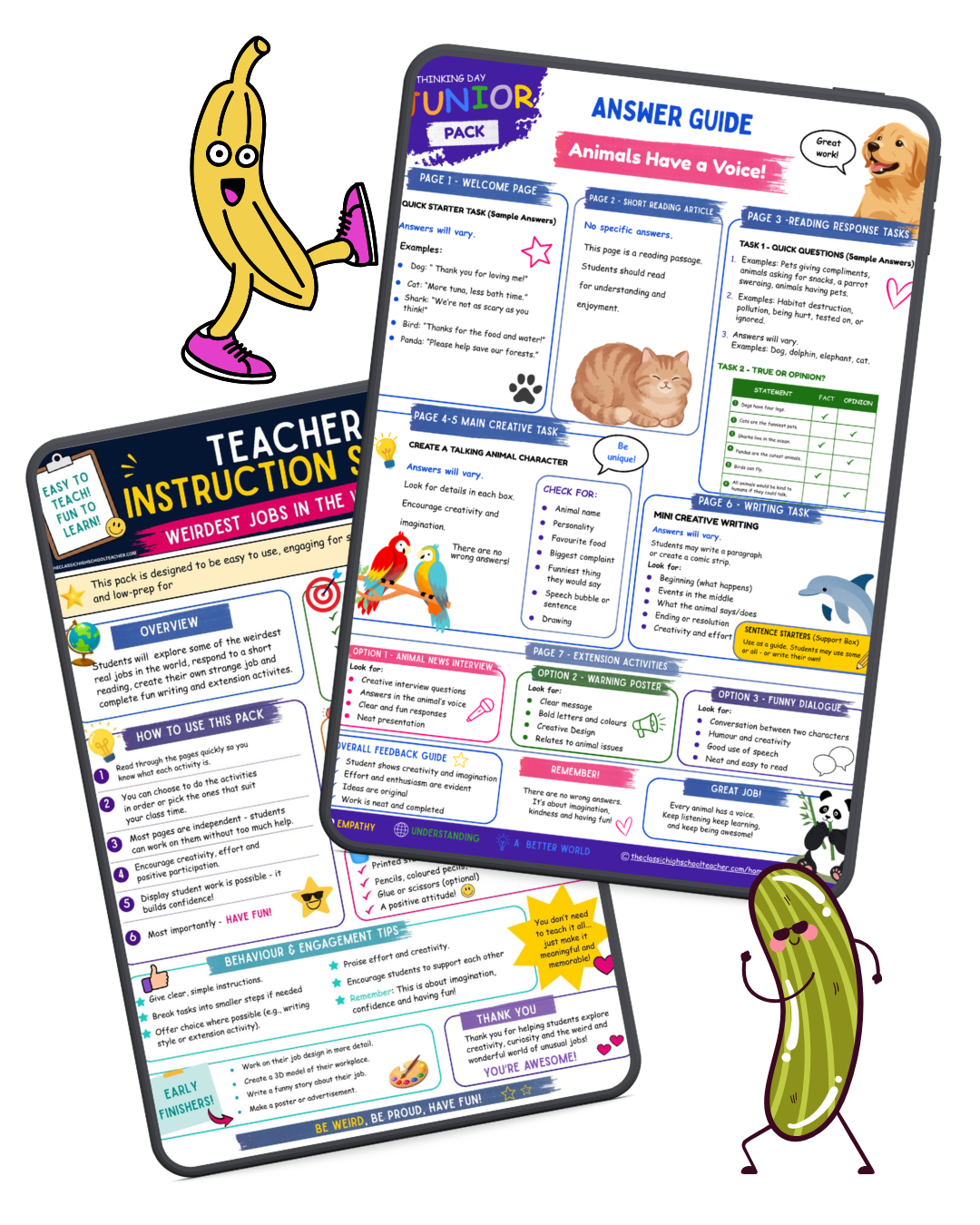
Download a free sample lesson from our JUNIOR THINKING DAY COLLECTION and explore the full format before purchasing.
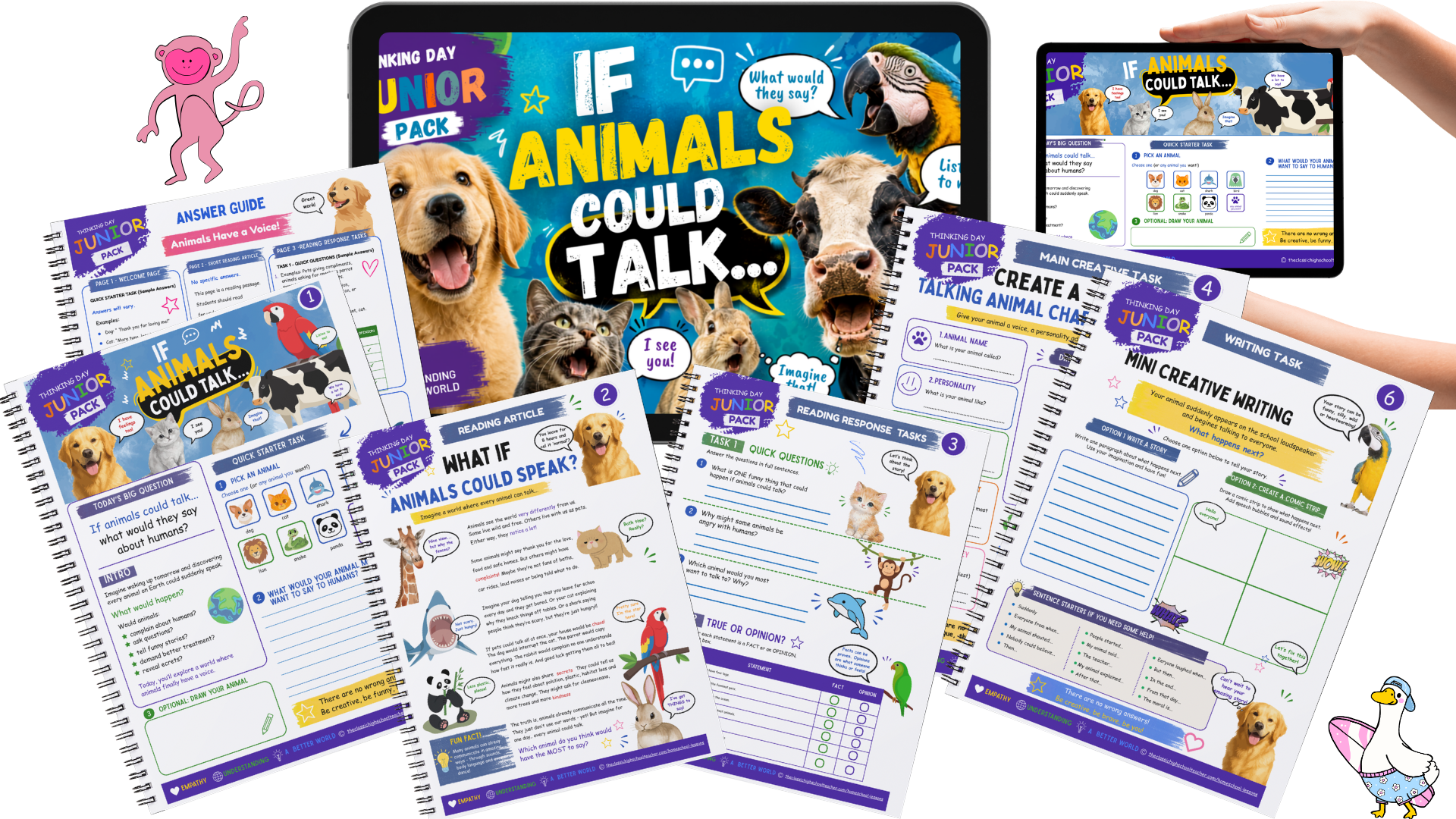
If Animals Could Talk...
What if animals could talk? This thought-provoking lesson challenges teenagers to explore communication, ethics, animal rights, and the relationship between humans and the natural world.
Through reading, discussion, reflection, and critical thinking activities, students will consider how society might change if animals could finally share their thoughts.
Perfect for curious teens who enjoy exploring big questions and different viewpoints.
Download Free Sample Pack (Ages 8 -12)
Start Exploring
Choose a topic that interests your family and start learning together today.
Real topics.
Real learning.
Real conversations.
EXPLORE THIS WEEK'S THINKING SKILLS PACKSMore Than Academic Knowledge

A great education isn't just about covering content.

It's about helping young people become thoughtful, capable adults.

The conversations students have today help shape the people they become tomorrow.

That's why every Thinking Day lesson begins with a big question worth exploring.

Because sometimes the most important learning starts with a conversation.
Join the Membership & Save!
Every month you'll receive four new critical thinking packs that caters to a range of learning abilities.


Thinking Day Junior
Ages 11-14
Big questions designed to spark curiosity, creativity, discussion, and critical thinking.
Perfect for younger teens who are developing confidence in expressing their ideas and exploring the world around them.
Example Topics
✓ If Animals Could Speak
✓ If School Was Run By Teenagers
✓ The Strangest Jobs In The World
✓ Design Your Own Country
✓ Could You Survive On A Desert Island?
✓ If You Could Invent Anything
✓ The World's Weirdest Laws
✓ Should Homework Exist?
✓ What Makes A Good Friend?
✓ What Would Happen If Technology Disappeared?

Thinking Day Senior
Ages 14-18
Thought-provoking lessons exploring real-world issues, ethics, technology, media, psychology, leadership, and the future.
Perfect for older teens ready for deeper discussion, debate, analysis, and independent thinking.
Example Topics
✓ Can AI Replace Human Creativity?
✓ Can We Trust Our Memories?
✓ The Psychology Of Social Media
✓ Should People Be Allowed To Say Anything Online?
✓ Should Robots Have Rights?
✓ What Makes A Good Leader?
✓ Is Happiness The Purpose Of Life?
✓ Should Influencers Have More Power Than Politicians?
✓ Is Privacy Dead?
✓ Could Humans Live On Mars?
Frequently Asked Questions
What exactly is a Thinking Day lesson?
Each Thinking Day lesson explores a thought-provoking question through reading, discussion, critical thinking, and reflection activities. Rather than focusing on memorising facts, Thinking Day helps teenagers develop the skills to think independently, consider different viewpoints, and express their own ideas.
Is this a worksheet pack?
No. While each lesson includes printable activities, Thinking Day is designed to spark curiosity, discussion, and independent thinking. Every lesson begins with a big question and encourages teenagers to explore ideas rather than simply complete tasks.
What age group is this suitable for?
Most Thinking Day lessons are designed for teenagers aged 12–18. Recommended age ranges are listed on each lesson page.
Does my teen need to write essays?
No. Activities may include discussion, reflection, short written responses, creative thinking tasks, or opinion-based questions. The focus is on exploring ideas rather than producing formal assignments.
Is this suitable for neurodivergent learners?
Many families find Thinking Day works particularly well for neurodivergent teens because the lessons are discussion-rich, low-pressure, and centred around curiosity rather than grades or tests. There are no "perfect answers" and students are encouraged to think in their own way.
Can this be used for homeschooling?
Absolutely. Thinking Day was designed to work well for homeschool families, independent learners, and parents looking for meaningful educational activities beyond traditional worksheets.
How long does a lesson take?
Most lessons take approximately 45–60 minutes, although many families find the discussions continue long after the lesson has finished.
Do I need teaching experience?
Not at all. Everything is designed to be easy to use. Simply open the lesson and follow the activities. Many teens can complete large parts of the lesson independently.
What skills will my teen develop?
Thinking Day lessons help develop:
✓ Critical thinking
✓ Communication skills
✓ Confidence expressing opinions
✓ Perspective-taking
✓ Independent reasoning
✓ Curiosity about the world
What if my teen disagrees with the lesson topic?
Perfect.
Some of the best learning happens when teenagers challenge ideas, ask questions, and explore different viewpoints. Thinking Day isn't about finding the "right" answer—it's about learning how to think.
Loved this lesson?
Imagine never having to search for meaningful discussion topics again.
Get a brand-new Thinking Day lesson delivered every month.
Learn More